Locks, keys and doors reward a little attention. A drop of the right lubricant, a spare key in a sensible place, a rekey when someone moves out. The advice here covers those small habits and the bigger decisions, like choosing between mechanical and electronic locks.
- Bulletin 1Spare Car Key Duplication: preparing for the visitOne key opens the car, starts the car, and rides in one pocket every day. Nothing backs it up.Read
- Bulletin 2Lock Rekeying: inside the visitOne key for the whole house is a common request and usually achievable. Cylinders that share the same keyway, the shaped channel the key slides into, can all be pinned to the same new combination, so the front door…Read
- Bulletin 3Motorcycle & Scooter Keys: comparing quotesOn many machines that carry one. The mechanical cut and the electronic pairing are handled as two separate steps: the key is shaped to fit the lock, then its chip is taught to the vehicle's module using an existing key…Read
Frequently asked questions
Lockout Services
I rent my place. Can I call a locksmith myself?
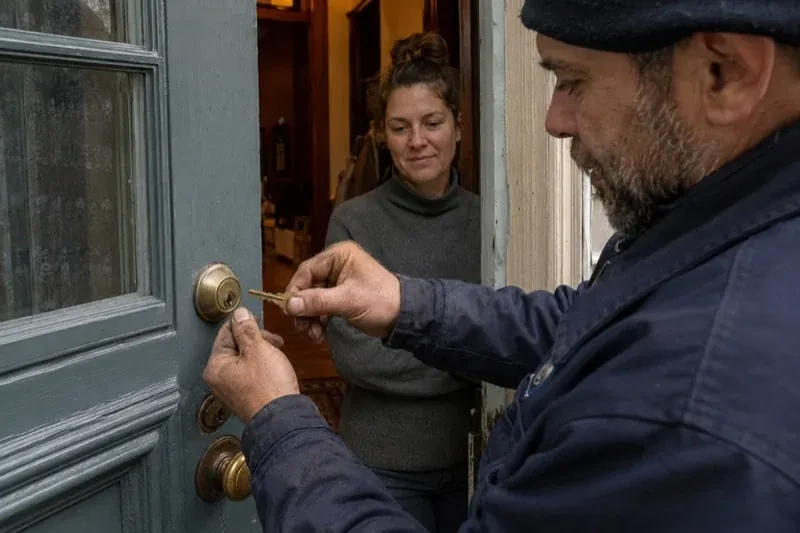
Yes. A tenant locked out of their own unit can arrange entry directly, and the identification check is the same: something that ties you to the address, such as a lease, a bill or a piece of mail, plus photo identification. Where you may want to involve your landlord is any change to the lock afterwards, because tenancy rules in this province expect landlords and tenants to agree on lock changes and to share keys. A locksmith can note what was done for the building manager. Home Lockout Service
Can you also deal with the back door, the roll-up shutter and the gate?
Yes. A business lockout covers every opening the premises relies on: the rear service door with its exit device, a roll-up shutter and its padlock, the compound gate, a mailbox in the lobby and interior doors such as the cash office or server closet. Mention each one when you call so the right padlock shackles, cores and cylinders are in the van, and so cylinders that should share a key are handled together. Business Lockout Service
What information helps when I call?
What the key was in: a front door deadbolt, a knob, a padlock, the driver's door or the ignition. Whether any of the key shows above the face. Whether the key turned before it broke and whether the door is locked now. Whether anything has been inserted since. Whether you have the other half, a spare or the key code. And whether the property is owned, rented or managed. Broken Key Extraction
Should I call the police before the locksmith?
Yes. Call the emergency number if there is any chance the intruder is still there, and the non-emergency line of your local police service otherwise. A break and enter is reported by phone rather than through the online forms used for minor property damage. Ask for the occurrence number, since your insurer will want it. Once the police have released the scene, or told you they are not attending, the locksmith can begin. Break-In Damage Lock Repair
Change or Rekey Locks
One of my locks is stiff and worn. Can it still be rekeyed?
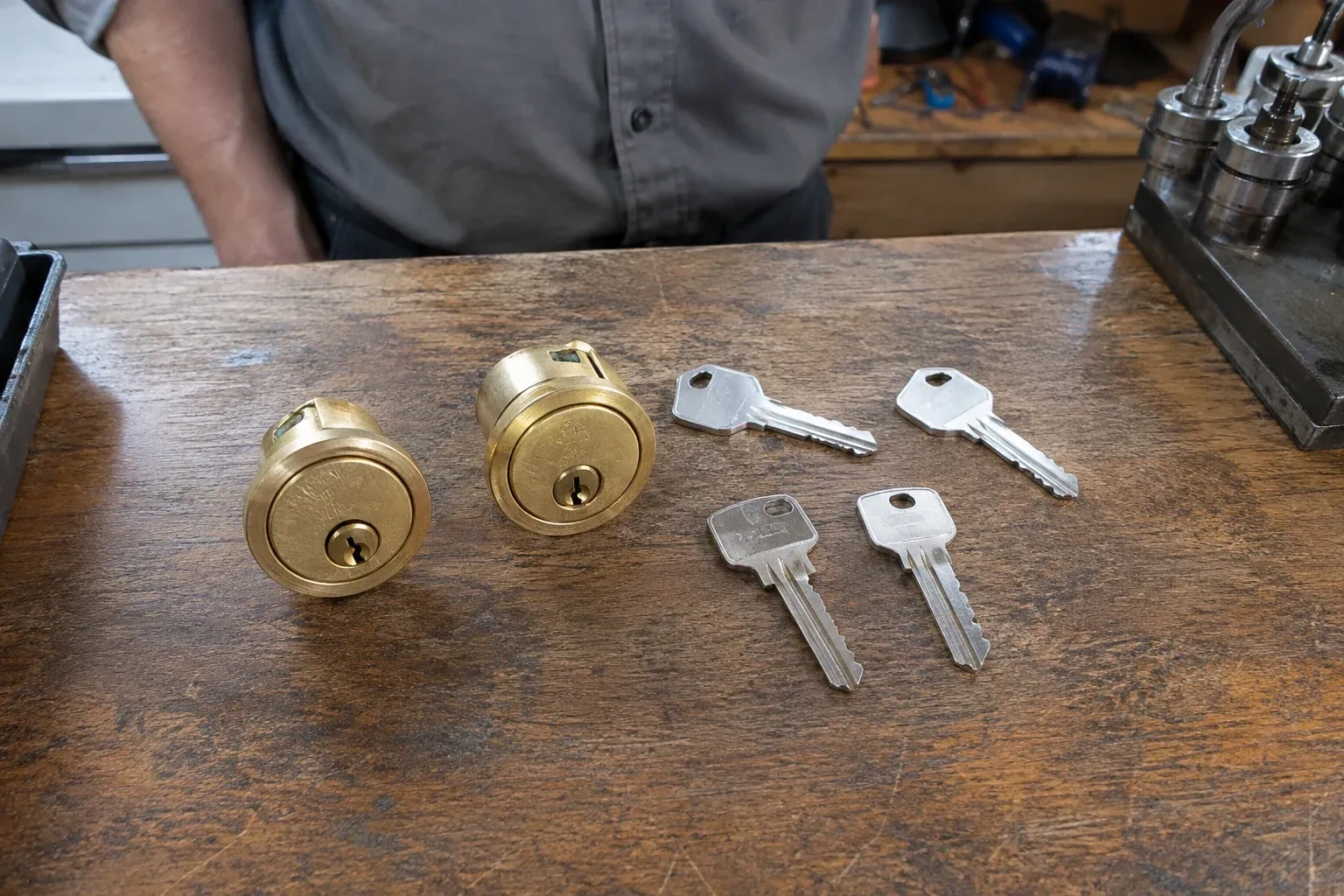
Often the stiffness is grit, old oil and tired springs rather than real wear, and those are handled while the cylinder is on the bench: the plug is cleaned, new springs go in with the new pins, and a dry lubricant finishes it. If the plug has worn oval or the housing is damaged, the locksmith shows you and suggests a replacement cylinder pinned to the same key, rather than fresh pins in a lock that will keep dragging. Lock Rekeying
How high above the knob does the deadbolt go?
The usual position is 140 to 150 mm above the centre of the knob, which lines the two locks up and keeps both within one reach. Manufacturers' templates assume that spacing, which helps a later keypad or handleset line up, though many handlesets still need their own lower hole drilled to that model's template. The height is nudged if it would land on glass, a decorative panel or a hollow spot inside an insulated door, and to make sure the frame behind it is solid. Deadbolt Installation
Can a lever replace a knob on the same door?
Yes, and it is a common change for anyone who finds a knob hard to grip. Levers use the same bore and backset as knobs, so the swap is usually a direct fit. Levers are handed, so the locksmith checks which way the door swings and chooses or adjusts the lever accordingly. A keyed entry lever pairs well with a deadbolt above it, and interior passage and privacy levers complete the set. Lock Replacement & Upgrade
What does the service visit involve, step by step?
The locksmith checks your authority to request the work, examines the door and lock, and tells you what it needs. The knobs, plates and cylinder come off, the case slides out of the door edge and is opened on a bench, cleaned, re-sprung and repaired. Keys are made or the cylinder rekeyed, the door pocket is tidied, everything goes back on, and the strike is adjusted. You test the finished lock from both sides. Vintage Mortise Lock Service
High Security Locks
Do you need the safe's model or serial number before you arrive?
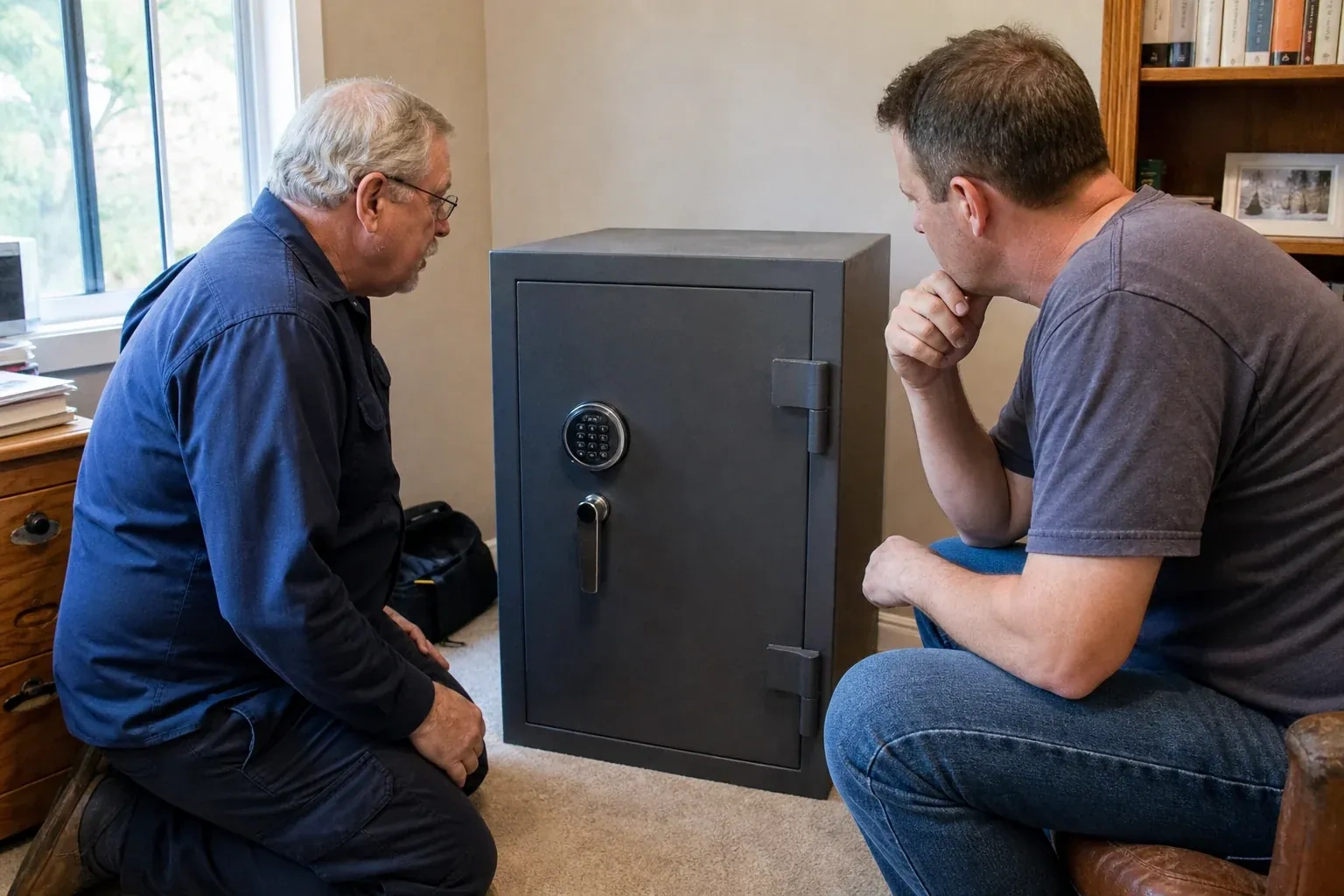
It helps but is not required. A data plate on the door or frame, a purchase receipt, or a manual kept in a drawer all speed up identifying the lock family in advance. Where none of that survives, the locksmith identifies the safe from its case shape, dial style and handle once on site, which simply adds a short assessment step at the start of the visit. Safe Opening & Combination Change
Can a safe hold both cash and paper documents at the same time?
Yes, though it is worth knowing the interior conditions suited to each are slightly different. Paper gains real heat protection from a fire-rated lining, but that same sealed lining traps humidity, so paper stored inside needs the same periodic airing and a desiccant packet as any fire-rated interior. Cash and other valuables mainly need the tool resistance of the body and door and tolerate the sealed environment more easily. A single well-chosen unit can hold both together without conflict, particularly with paper kept in a sealed folder or bag inside. Safe Installation & Servicing
What happens when the patent on my keys runs out?
The mechanical resistance of the cylinder does not change, but blanks may become openly available, so copy control weakens. Manufacturers issue new patented keyways as older ones expire, and the usual answer is to move to the next generation by changing cylinders and keys while keeping the lock bodies. Your locksmith notes the patent term at handover so the date is on the calendar rather than a surprise years later. High Security Locks
Commercial Locks
What is the difference between rekeying a business and replacing its locks?
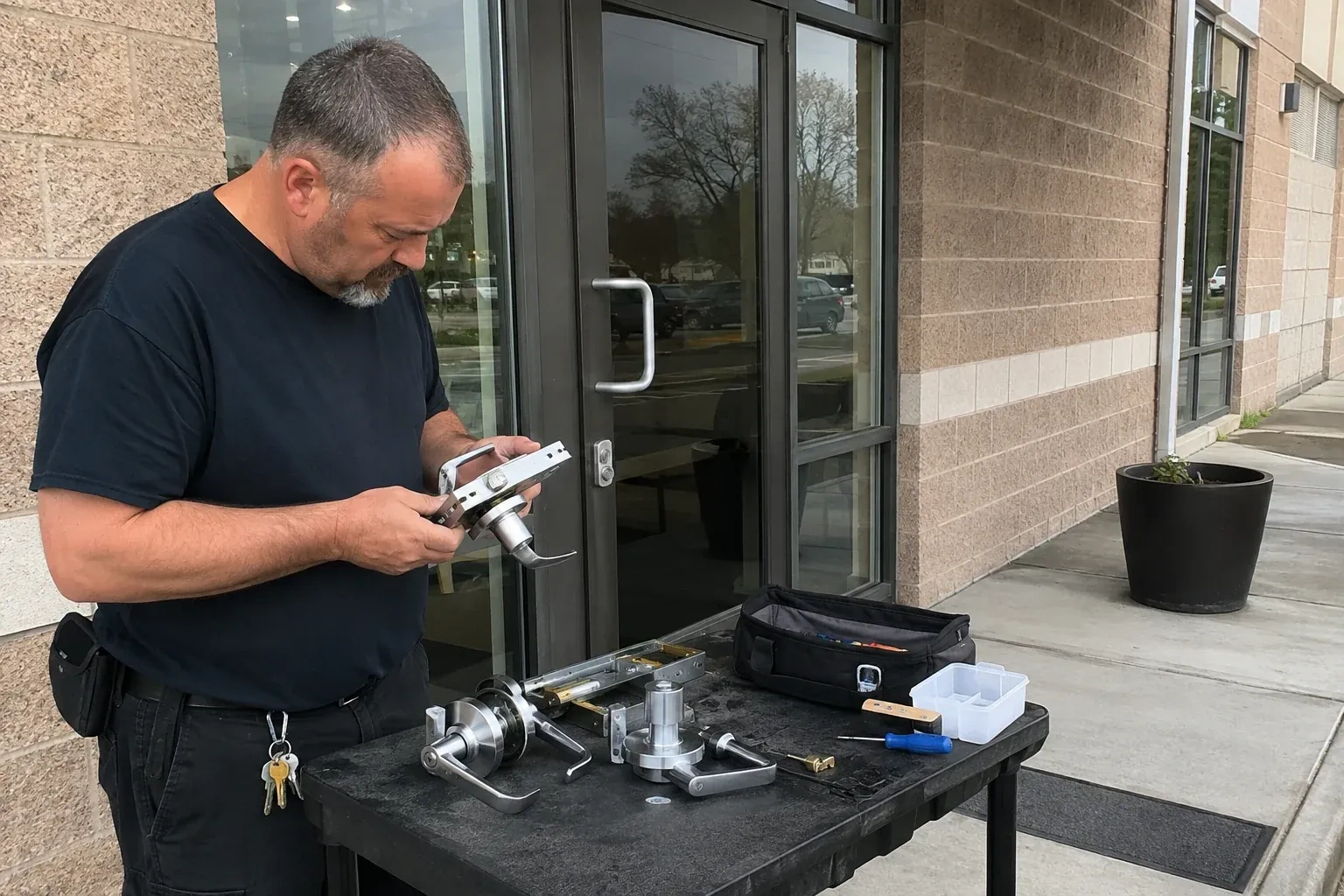
Rekeying keeps every lock on the door and changes only the pins inside the cylinder, so a new key works and the old ones stop. Replacing swaps the hardware itself. Commercial cylinders are made to be repinned many times, so rekeying suits any lock in sound condition and leaves the levers, trim and door untouched. Replacement is chosen door by door for cylinders that are worn, corroded or too light for what they protect. Commercial Rekeying
Can my existing locks be used, or do I need all new hardware?
Many existing cylinders can join a new hierarchy as they are, once their keyway and condition are confirmed compatible. Others, particularly older or mismatched hardware, are replaced so the whole system pins cleanly without cross-keying. The assessment identifies which doors fall into each group before any work begins, so the plan reflects what is actually on the property rather than assuming everything needs to change. Master Key System Design
Who keeps administrative control of the software after installation?
The business does. Handover includes a full administrator account with the ability to add and revoke credentials, change schedules, and pull an entry log, confirmed working before the locksmith leaves. Whether the installer keeps any support or portal access beyond that is a setting agreed with the business, not a fixed feature of every system, so it is worth confirming as part of that handover. Access Control Installation
Do exterior exit doors need anything different from interior ones?
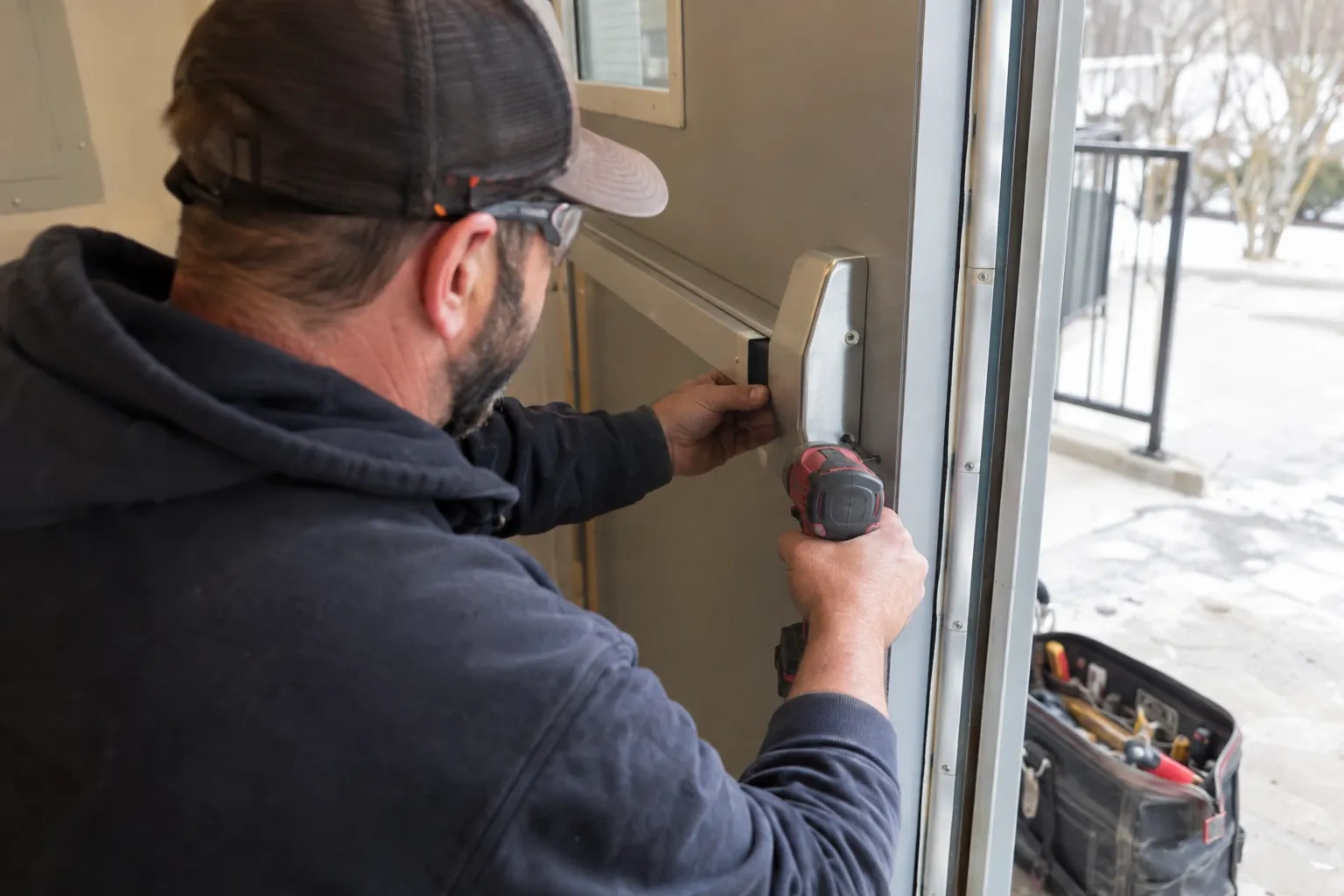
An exterior device faces weather an interior one does not: temperature swings, moisture and road salt tracked up to the door in winter. The device, strike and trim chosen for an exterior opening account for that exposure, and more frequent cleaning and light lubrication keeps an exterior crossbar releasing smoothly through a whole winter season. Panic & Exit Hardware
Car Keys
The alarm went off. Is that a problem?
It is expected. Opening a door without the fob or key wakes most factory alarms, and quieting them is part of finishing the job: a turn of the key in the door or ignition, or a press of the fob once the car has power, usually does it. An aftermarket alarm is reset from its own valet switch. The locksmith stays until the car is quiet and every lock has been cycled. Car Lockout Service
Can you make a key if every key to the car is gone?
Often, yes, for vehicles with a supported conventional key system: the car is opened, a blade is produced by decoding the door lock or retrieving the factory key code, and the immobilizer is reset so the missing keys are erased before new ones are stored. A key-card or phone-key vehicle, or one needing a dealer procedure, follows its own route instead, which is why the VIN is asked for on the first call. Car Key Replacement
Is cloning the same as programming a new key?
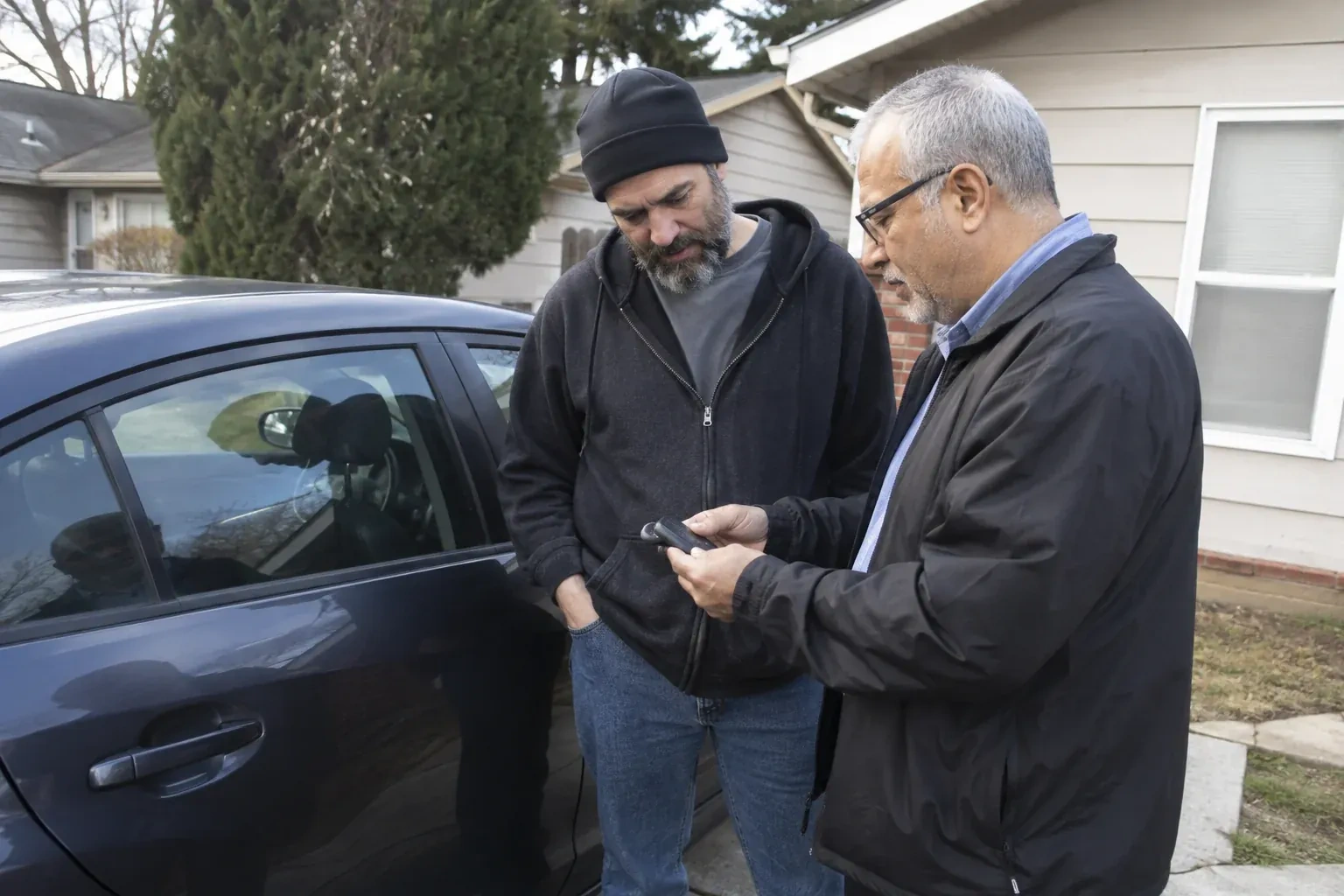
They solve the same problem differently. Cloning copies the working key's existing code onto a new chip, which some vehicles' systems permit directly. Programming instead has the vehicle itself learn a brand-new code and accept it as an additional valid key, which is how most recent vehicles with rolling codes or added cryptography are handled, since their systems are built specifically to resist straightforward copying. Spare Car Key Duplication
Can you program a fob for a new driver without touching the fobs we already use?
Yes. Adding a fob for another driver joins it to the vehicle's accepted list alongside the fobs already there, and on many vehicles the ones already in daily use are not re-registered or disturbed in the process, though some procedures need every fob present and re-registered together. Each fob keeps its own identity in the vehicle's memory even though they all operate the same doors and engine. Key Fob Programming
On-site assessment
Request a visit.
Reach out and we'll explain the options.
(289) 301-8897, open 24/7.