Box Grove Locksmith ProsBulletin 2 of 3Markham, Ontario
Lock Rekeying: inside the visit
One key for the whole house is a common request and usually achievable.
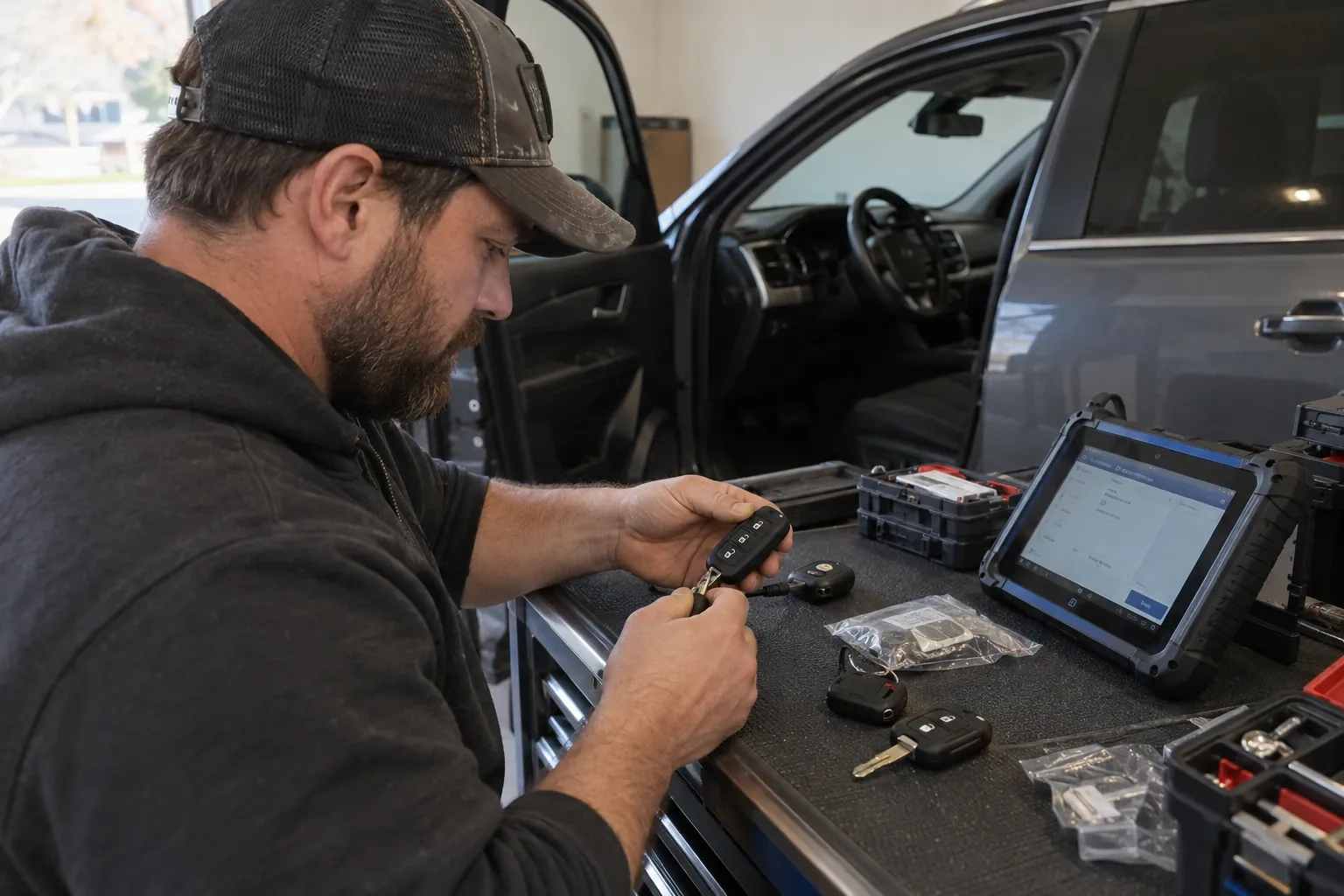
One key for the whole house is a common request and usually achievable. Cylinders that share the same keyway, the shaped channel the key slides into, can all be pinned to the same new combination, so the front door, back door and garage entry answer to a single key. Where a door carries a lock from a different family with its own keyway, that cylinder is swapped for a matching one rather than repinned, and then it joins the group. The locksmith checks each lock face before the work begins so you know exactly which doors will share the key.
Counting the keys that are already out there
Part of planning a rekey is understanding why it is happening. The locksmith asks how many keys exist as far as you know, who has held one, and whether any went missing with something identifying the address. The answers do not change the pinning, but they shape the advice: whether a padlock or mailbox shares the same risk, whether a garage keypad code should change on the same visit, and how many new keys make sense to cut. It also helps to know whether any key is a restricted or patented type, since those are cut from a record rather than duplicated and may involve the original supplier.
Bringing several doors onto one key
Keying doors alike is the same operation repeated with the same new key. Once the first cylinder is pinned and proven, the locksmith removes the second, follows the plug out, and loads bottom pins to the identical depths so the same key operates it, and so on around the house. Where a door carries a cylinder from a different keyway family, that cylinder is exchanged for a matching one in the same finish and then pinned to the house key. The result is one key on your ring that turns every exterior door, with the individual locks unchanged in appearance and function.
Looking after a freshly pinned cylinder
A cylinder that has just been rekeyed turns as smoothly as it ever will, and a little care keeps it that way. Once or twice a year, a puff of whatever lubricant the cylinder maker specifies into the keyway and a few turns of the key is all it needs, since some current cylinders use oil while too much graphite can itself gum a cylinder. When you need more copies, cut them from one of the locksmith's originals rather than from a copy, because each generation drifts a little from the true depths. A key that starts to need a jiggle is the cylinder asking for a clean and a new key, not a sign of anything serious.